
Seasonal Pool Maintenance in Arizona: What Homeowners Need to Know
Here in the Southeast Valley, our pools work overtime all year long. Between haboobs, monsoon storms, high winds, intense UV, and even the occasional cold snap, Arizona pools experience more seasonal stress than most people realize. Understanding what your pool goes through — and how to respond — helps protect your investment and keep your water clean, clear, and safe.
Let’s look at how seasonal events affect pools across Mesa, Tempe, Chandler, Gilbert, and Queen Creek, and what steps you can take to stay ahead of the elements.
Arizona’s Unique Seasonal Challenges
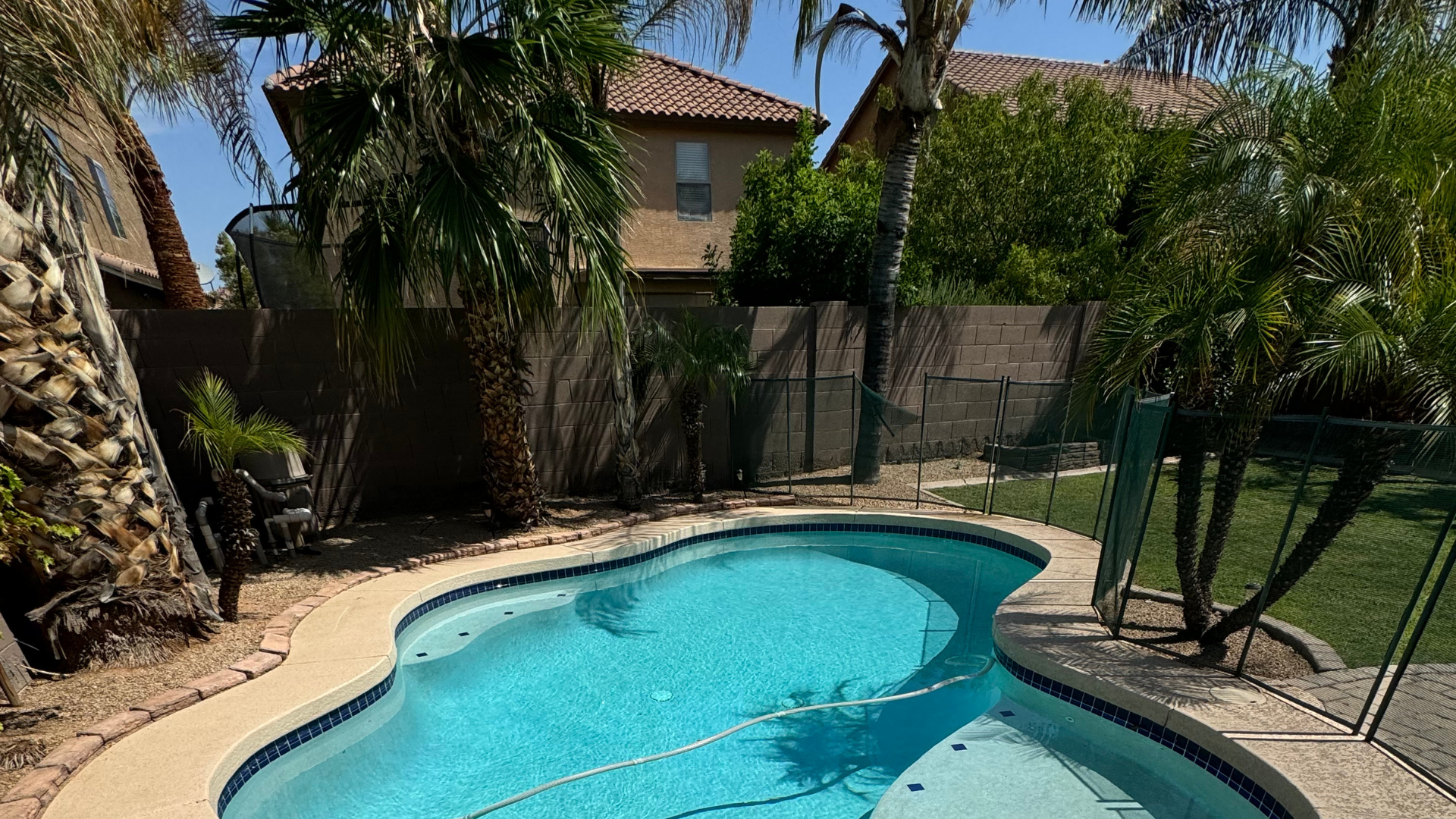
While our winters are mild, our region’s climate puts pressure on pools in ways that are unique to Arizona. Here are the most common seasonal events to look out for:
Monsoon Season
From mid-June through September, monsoon storms bring heavy rain, lightning, and strong winds. This can overwhelm filters, dilute chemicals, and fill pools with debris. Storm activity typically peaks in July and August, which means mid-summer maintenance is crucial to avoid cloudy or unbalanced water.
Haboobs and Dust Storms
Haboobs often roll in with little warning and leave a thick layer of dust on every surface — including your pool. Dust settles on steps, tiles, and inside skimmer baskets, quickly clogging filters. After a haboob, we recommend running your filtration system continuously overnight and brushing the pool thoroughly to prevent cloudy water or algae bloom.
Extreme UV and Heat
Arizona’s sun is relentless. UV rays break down chlorine fast, so we advise testing your pool water more frequently during the summer — especially after storms or heavy use. Keeping chlorine levels balanced prevents bacteria growth and protects both swimmers and your pool surface.
Cold Snaps and Early Frost
Even though we rarely face hard freezes, chilly nights can still affect pool equipment and water chemistry. Pumps and heaters work harder in cooler temperatures, so maintaining circulation year-round is key. We often hear, “Do I really need to maintain my pool in winter?” The answer is yes — consistent care prevents algae growth and equipment wear.
The Most Common Seasonal Issues We See
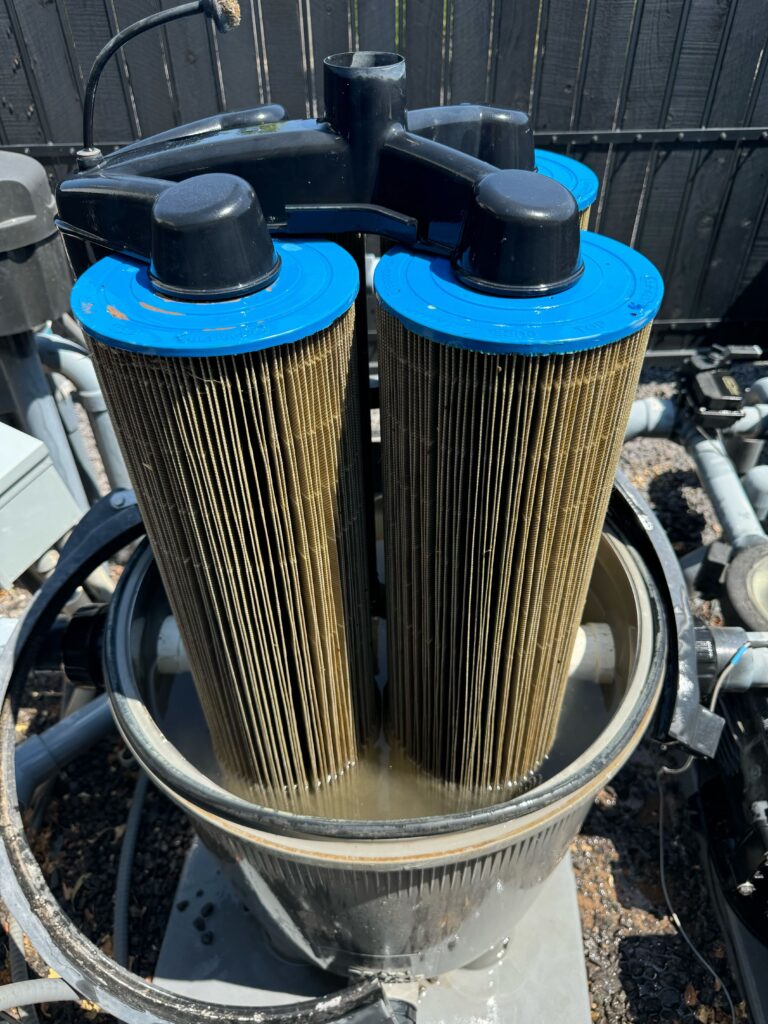
Across the Southeast Valley, we regularly help homeowners with:
- Clogged filters and reduced flow after dust storms.
- Water chemistry imbalance following monsoon rains.
- Debris-filled skimmer and pump baskets.
- Heat-related strain on equipment.
- Cloudy water and algae blooms.
- Hard-water scaling along tile lines.
If you’re wondering how to get rid of algae, the key is proper brushing, shocking, and maintaining sanitizer levels — especially after storms when organic debris introduces new contaminants.
As for how long to run your pump, 8–12 hours a day is standard — but after extreme heat or a major weather event, running it longer can help restore clarity and balance.
Our After-Storm Recovery Checklist
When the dust settles or the rain passes, here’s how to bring your pool back to balance:
- Remove debris from skimmer and pump baskets to restore water flow.
- Skim and brush walls, steps, and floors to push dirt toward the main drain.
- Adjust the water level if rain or backwash raised it too high.
- Test your chemistry — check pH, alkalinity, and sanitizer levels.
- Shock the pool to kill bacteria or algae from storm debris.
- Run your pump overnight to circulate and filter contaminants.
- Clean or backwash filters after dust storms or monsoon rainfall.
- Inspect equipment for clogs, leaks, or water damage.
- Vacuum and finish with a final water check before resuming normal use.
Smart Upgrades for Arizona Conditions
Our environment is tough on pools, but a few smart upgrades can make maintenance easier and extend your pool’s lifespan:
Saltwater systems: Generate chlorine automatically for a softer feel and easier ongoing maintenance.
Variable-speed pumps: Energy-efficient and perfect for extended run-times during summer and post-storm cleanup.
Enhanced filtration: Larger cartridge or DE systems handle dust and debris more effectively.
Tile sealants: Reduce hard-water buildup and simplify cleaning after storms.
PebbleTec® finishes: With proper brushing and chemical balance, these durable surfaces stand up beautifully to Arizona’s UV and dust.
Staying Ahead of Seasonal Changes
Every season brings its own set of pool challenges in Arizona — from monsoon floods to dust buildup and winter slowdowns. Staying consistent with your maintenance routine, testing water regularly, and responding quickly after storms will keep your pool looking crystal-clear year-round.
We know what Arizona weather can do to a pool — and we’re here to help you prepare for it.
If your pool is showing signs of stress from recent weather or needs a professional check-up, book a maintenance or repair visit with us today.